
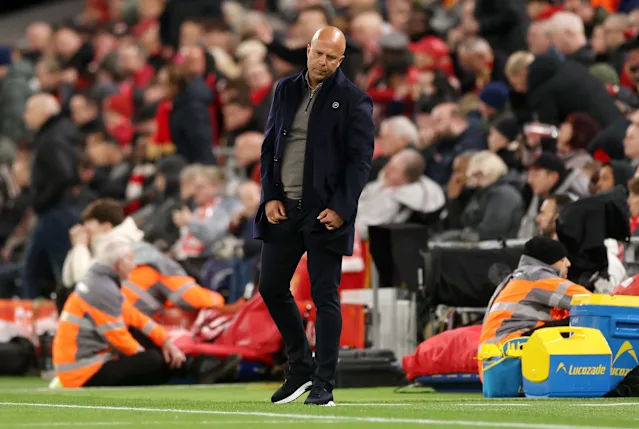
Mid‑season coaching changes in the 2018/2019 Premier League did not just reshuffle dugouts; they reshaped expectations, tactics and the way odds were set around several clubs. For a serious bettor, the key task was not to celebrate or condemn each sacking, but to recognise recurring patterns—short‑term shocks, tactical shifts, and market overreactions—that affected handicaps and match outcomes in predictable ways.
Why the idea that manager changes affect prices and results is reasonable
There is now a large body of work examining how dismissing a head coach during the season affects team performance. A systematic review found that mid‑season changes tend to produce a short‑term improvement in results—more points and better outcomes in the immediate matches after the switch—but that this effect fades over time, with performance returning toward previous levels after roughly 10 games. One league-wide study quantified this bump: following coach changes across several seasons, points per match increased by about 0.23, the probability of winning rose by roughly 8%, and goal difference improved by about 0.30 in the short run.
Sports‑betting specialists highlight a parallel mechanism on the market side. When a new manager arrives, public optimism often inflates expectations and compresses odds in favour of the “new regime,” even before tactical improvements have actually appeared in data like shots, xG or defensive structure. Together, these findings make the core idea reasonable: manager changes generate a brief on‑pitch lift and an immediate market story, and the relationship between those two is where betting opportunities sit.
How the 2018/2019 Premier League season used the sacking option
Between 2015 and 2019, Premier League clubs collectively paid around £130 million in compensation to sacked managers, underlining how embedded mid‑season dismissals had become as a tool for resetting expectations. The 2018/2019 campaign continued that pattern. Several clubs around the bottom and mid‑table changed coach mid‑season after poor starts or prolonged slumps, hoping for a quick reaction and a new tactical identity to avoid relegation or to salvage a European push.
In practice, that meant bettors were repeatedly faced with the “new manager question” across the calendar: should you trust an immediate bounce, fade public enthusiasm, or wait for harder evidence in performance metrics? Because the same pattern repeated across different clubs, 2018/2019 offered a compact laboratory for how the change‑coach‑then‑react cycle plays out in both league tables and markets.
Mechanisms: how coaching changes typically move performance and odds
Research and betting practice converge on a three‑phase mechanism when teams replace a coach mid‑season.
Short, medium and long-term phases after a change
- Psychological shock and short‑term lift
Studies show that a new coach often triggers a “shock effect” that boosts motivation and, for a handful of games, improves results independently of tactical detail. Players try to impress, rotation resets hierarchies, and old frustrations are briefly parked. Performance gains of around 0.2–0.3 points per game and an 8–13% rise in win probability have been documented in early post‑change stretches. - Tactical adjustments and medium‑term stabilisation
As the new coach installs systems, changes to pressing, formation and build‑up start to show up in possession, shots and xG. Some teams sustain or deepen improvement; others see the initial bounce fade as opponents adapt and internal frictions return. Analysts note that true tactical gains are best tracked through metrics rather than results alone. - Reversion and long‑term reality
Over longer horizons, performance often drifts back toward the level implied by squad quality, injuries and budget. The review literature stresses that, in many cases, the apparent “success” of sackings is partly regression to the mean after a bad run, rather than lasting transformation. For bettors, that means the edge shrinks as the novelty wears off and odds realign with deeper fundamentals.
On the market side, betting guides emphasise how early odds around a new manager can be distorted: public hype shortens prices on the team, especially in the first one or two matches, even when underlying performance is not yet improved. That gap between perception and data is the practical angle.
A table for thinking about different coaching-change situations
Rather than treating all manager changes as equal, it helps to sort them into situational types that predict how both performance and handicaps are likely to behave:
| Type of mid-season change | Typical club situation and intent | Performance pattern and betting implication |
| Early-season panic after poor start | Small sample of bad results, thin squad, high anxiety | Short bounce likely; big risk of regression; fade overpricing after 1–2 wins |
| Relegation-focused change in winter | Team underperforming expectations near drop zone | Emotional lift; more intensity; useful for short-term handicaps at home |
| Ambitious club replacing underperformer | Decent squad, Europe/top‑four ambitions, structured plan | Tactical improvements can sustain; monitor shots/xG before trusting big lines |
| Late-season caretaker after “lost” campaign | Safety or relegation already near-certain | Mixed motivation; some dead rubbers; avoid over‑reading any bounce |
These patterns reflect broader empirical conclusions that the context around a sacking matters at least as much as the identity of the incoming coach when it comes to sustained improvement.
How UFABET can sit inside a structured manager-change betting framework
If you want to trade manager changes rather than react to headlines, the order of operations is critical. A disciplined approach would be to build a small log of each 2018/2019 coaching switch: timing in the season, points per game before the change, and whether the squad profile suggested underperformance or deep structural issues. For the first few matches after the appointment, you could tag each game with your expectation—slight bounce, neutral, or no effect—and compare that to how odds moved relative to previous weeks. Only after that analysis do you decide how to act: perhaps fading the new‑manager favourite at very short home prices, or cautiously taking a modest handicap at home if the market remains sceptical.
At the implementation stage, using a chosen sports betting service, for instance ufabet uefa, simply becomes the final link in the chain: the place where specific positions you’ve sized in advance are executed according to your manager‑change log, rather than a venue that tempts you into betting every new‑coach narrative as soon as it hits the news feed.
Where a casino online environment can distort manager-change judgement
Managerial sackings and appointments are made for drama: press conferences, quotes, and social feeds all amplify the narrative of a “fresh start.” Studies on gambling promotion around televised sport note that operators heavily showcase live odds and refreshed markets at such moments, knowing that fresh news drives engagement and impulsive bets. In a broad online gambling environment, that can translate into a wave of bets on the new coach’s first game, backing short prices or speculative markets like “win to nil” without any evidence that the team’s underlying performance has changed.
The safer habit is to treat new‑manager fixtures as a specific category in your notes, with predefined rules: no bets on the very first game unless the price is unusually generous; focus on whether the market has overreacted; and require at least some statistical sign—improved shots, more coherent pressing—before you start backing big handicaps. Logging the outcomes of these disciplined decisions versus the occasions when you allowed the story to carry you helps reveal whether your manager‑change reads are genuinely adding value.
What strengthens the link between coaching changes and betting edges
Certain conditions make managerial switches more likely to produce actionable edges rather than just noise. First, when the previous coach’s dismissal looks clearly “late” relative to performance data—long‑running bad metrics, repeated tactical errors—there is more room for immediate improvement. Research that classifies sackings as wise or unwise, based on whether results lagged expected rank, finds that “wise” dismissals are followed by larger gains in points and win probability. That gap between performance and results suggests underused squad potential that a competent successor can unlock.
Second, when the incoming coach has a sharply contrasting tactical approach—pressing vs passive, possession‑heavy vs direct—the early matches can offer edges before markets fully adjust. Betting experts recommend tracking metrics like possession share, shot quality and pressing intensity to see whether promised changes are actually taking hold; once those numbers move, the handicap gap sometimes persists for a short period while odds still anchor to older perceptions.
Third, when the schedule after the change is soft—several games against bottom‑half opposition—early wins may be more likely than raw quality suggests. In 2018/2019, some new coaches benefited from precisely such runs, combining the psychological bounce with accessible fixtures. Recognising when a “new-manager run” is schedule‑aided helps you avoid over-crediting coaching and overpaying later when the calendar toughens.
Where the “new manager effect” fails as a betting idea
There are also clear limitations and failure modes. Statistically, many apparent new‑manager bounces can be explained by regression to the mean: teams are often sacked after spells of unusually bad finishing or defensive errors, and a rebound would have come even without a change. The systematic review literature warns against treating correlation as causation here, emphasising that longer‑term performance often looks similar whether a coach is sacked or retained after a bad run.
Additionally, some appointments are poorly matched to the squad or to the league, leading to tactical confusion and even worse results. Betting case studies highlight spells where new coaches implemented systems their players could not execute, and where fading those teams—backing opponents on handicaps—was consistently profitable until the next change. For 2018/2019, any club that moved from a stable system to an ill‑fitting one would have presented that kind of opportunity.
Finally, the edge is time‑limited. Once markets have seen 8–10 games under the new coach, odds typically reflect the updated level of performance, and any early mispricing disappears. Research on competitive balance and long‑run predictability of the Premier League underscores how quickly information is incorporated into expectations across the league network. Treating every coach change as an evergreen angle is just another narrative trap.
Summary
Mid‑season coaching changes in the 2018/2019 Premier League were part of a broader pattern in which clubs used sackings to chase quick reversals of fortune, often achieving a short‑term bump in results that statistical work suggests averages around 0.2–0.3 extra points per game and a modest jump in win probability. That bounce, however, tended to fade as regression to the mean and deeper constraints—squad quality, injuries, schedule—reasserted themselves. For bettors, the practical value lay in recognising where public enthusiasm temporarily shortened odds beyond what performance justified, where genuinely fresh tactical ideas produced underpriced improvement, and where poor fits or overreactions made opposing the “new era” a better long‑term play than joining it.
