
A backyard pond that once looked inviting can slowly turn murky, smell sour, and draw more mosquitoes than visitors. Most owners stop sitting near it long before they figure out why. When you shop for pond aeration, you start fixing the cause instead of the symptoms, and the pond begins to earn its place again as a piece of attraction.
Still water is usually the root problem. Without movement, oxygen runs low, organic debris breaks down slowly, and algae takes over. Homeowners who shop for pond aeration get steady circulation day and night, which supports clearer water, fewer odors, and a pond that pairs naturally with plants, stone, and a comfortable seat nearby.
A Neglected Pond Works against the Yard
Odors, Algae, and Mosquitoes: A stagnant pond starts to smell because debris on the bottom breaks down without enough oxygen, and that process gives off a rotten-egg odor. The same conditions let algae spread across the surface and give mosquitoes calm water for laying eggs. Each one makes the space around the pond less pleasant.
A Pond That Slowly Fills In: Waiting another season gives a neglected pond time to fill in. Leaves, grass clippings, and dead plant matter settle each fall and make the water shallower over the years. In day-to-day pond service, crews routinely meet owners whose water lilies had been crowded out by algae and buildup, so replanting became part of the repair.
Aeration Keeps the Water Moving and Fresh
Bubbles That Circulate the Whole Pond: Pond aeration works by pushing air from a small shoreline pump through tubing to a diffuser on the pond floor. Rising bubbles lift bottom water to the surface, where it picks up oxygen before sinking again. That steady loop mixes the pond from top to bottom and keeps no corner sitting still for long.
Fewer Odors and Less Muck: Steady aeration cuts down on pond odors because oxygen-rich water favors the microbes that decompose leaves and debris without producing foul gases. That cleaner breakdown reduces muck and the nutrients algae feed on. A moving surface also discourages egg-laying mosquitoes, and in cold climates an aerator can hold open a hole in the ice for gas exchange.

Air Diffusers, Fountains, and Waterfalls Compared
Quiet Diffused Air Systems: A diffused air system suits most backyard ponds because it circulates the full depth of water quietly and on modest power. The diffuser hides on the bottom, so nothing changes the look of the pond. The trade-off is that the air pump needs a sheltered spot on shore and the system adds no visible display.
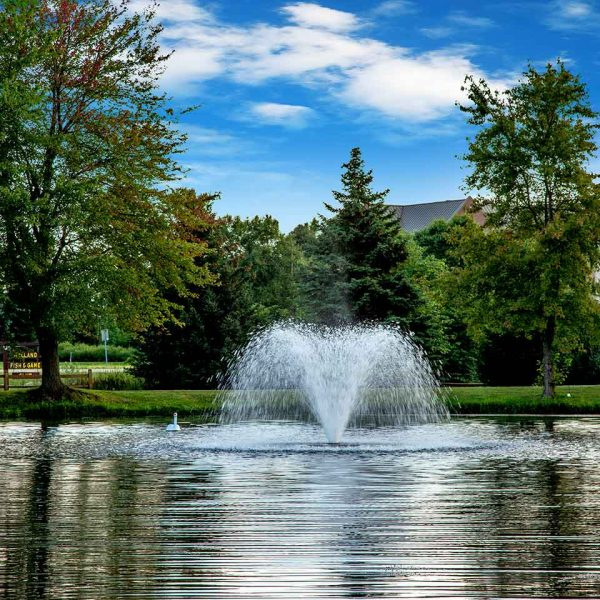
Fountains and Waterfalls on Display: Fountains and waterfalls aerate mainly at the surface while adding sound and visual appeal. A floating or submersible fountain is simple to add, and a waterfall brings a natural look but usually needs rock work and some construction. Many owners who shop for pond aeration pair a quiet diffuser with one visible feature.
A Healthy Pond Anchors the Backyard View
A Calm View from the House: A clear, well-kept pond becomes a relaxing place to rest your eyes because it mirrors the sky and changes with the light through the day. Placing a bench or two chairs beside the water, in view of the house, keeps the pond part of daily life. Dragonflies and birds add something new to watch.
Plants, Rocks, and Surrounding Greenery: Aquatic plants, natural rock, and nearby greenery help a pond look settled into the garden rather than dropped into it. Water lilies shade the surface, while marginal plants such as iris and rushes soften the edges. Boulders hide aeration tubing, and ferns or hostas planted behind them blend the water into the rest of the yard.
Routine Care Pays Off Every Season
Habits That Prevent Big Cleanups: Regular pond care takes little time once aeration is in place. Skimming leaves, netting the pond before autumn leaf drop, and trimming faded plant growth keep debris from piling up. Cleaning the diffuser, checking the air line, and changing the pump’s air filter once or twice a season keeps bubbles flowing evenly across the bottom.
Healthier Water for People and Wildlife: A consistently aerated and maintained pond supports a healthier aquatic environment, with clearer water, steadier oxygen, and fewer odors. Frogs, birds, and beneficial insects find it a reliable water source, so the pond doubles as a small backyard wildlife habitat. The space stays pleasant from spring through fall with less effort each year.

Warning Signs a Pond Needs Aeration
Clues Worth Acting On: A pond usually signals that it needs better circulation well before problems become serious. The signs below are easy to spot during a quick walk past the water. Noticing them early lets you add aeration while the fix is small and the plants and fish around the pond are still healthy.
- A rotten-egg smell near the water points to low oxygen at the bottom.
- Stringy algae spreading across the surface suggests still, nutrient-heavy water.
- Fish gulping at the surface near dawn often signal an oxygen shortage.
- Mosquito larvae wriggling in calm corners show where water is not moving.
- When you shop for pond aeration early, a small diffuser kit often does the job.
A Pond Worth Sitting Beside
A circulating, well-kept pond gives your backyard a calm place to sit, fresher air around the water, and a home for local wildlife. Each season without aeration adds another layer of debris to clear later. Get in touch when you are ready to shop for pond aeration and choose a setup sized for your pond.